Solly's Blog
Intro#
In this blog post, I will be discussing my portfolio project and the motivation behind it. The purpose of this portfolio is to showcase my skills and experience to hiring managers and developers. I will dive into what each audience is typically looking for and how my project caters to their needs. The post will be divided into five sections: Purpose and Goal, Spotlight, Tech Stack Explanation, Lessons Learned, and Current Status (Optional). I will share my thought process, the technologies and tools used, and the challenges faced during the project development. I will also include a Project Thumbnail and Preview section to give readers a quick overview of the project.
Motivation and Target Audience#
The motivation behind creating my portfolio is to showcase my skills and experience to both hiring managers and developers. These groups have different priorities, but I aim to provide a comprehensive view of my abilities to cater to both.
What Hiring Managers Are Looking For#
- Competence. Has this person built professional-looking projects before?
- Enthusiasm. Does this person seem eager to learn, excited about the kinds of work they would do on the job?
- Fit. Does this person have the right kind of personality for the company? Have they worked with the languages and frameworks we use here?
What Developers Are Looking For#
- Thought process. How does this person approach problem-solving?
- Code quality. Is it tested, documented, and following best practices?
- Does this person have the grit to solve complex problems and the humility to admit when they are wrong?
- Are the technical descriptions and explanations accurate and easy to read?
Section 1 - Purpose and Goal #
This first section tells my audience why I created the project. I want to convey that I had a vision and executed that vision by completing the project. Here are some questions I ask myself when creating this section:
- Why is this project important to me? What inspired it? Why did I build this? What was the expected outcome of the project?
- Did I build the project to solve a specific niche problem I had? Employers love to hear about these projects because it shows I can apply my skills creatively and tackle a project from start to finish.
- What are the significant features that make it unique? How does it compare to existing products like it?
- What was my role in the project? Was I exclusively doing development, or did I do design as well? If I worked in a group, what parts did I tackle?
Section 2 - Spotlight#
What is the "killer feature" of my project? What feature does it have that took the most work or was the most technically impressive?
Section 3 - Tech Stack Explanation#
Here I tell the story of how I chose different technologies and tools to build my project.
- What did I start with? Was this built from scratch, or did I leverage a template?
- What was my process for completing this project? Did I do wireframes, make a Trello board, and create GitHub issues?
- For each technology/tool, why did I choose it, and what technologies did I consider but ultimately decided not to use?
- Were the tools chosen because of familiarity, complexity, or wanting to learn something new?
Section 4 - Lessons Learned#
- What would I do differently if I could do it all over again? Was it an excellent choice to use a framework or other libraries/tools? How did it help? In which ways was it insufficient?
- What were the technical hurdles that got in my way? Any significant problems I hit during development? How did I solve those problems? What was the solution? I go deep here and write with a developer in mind.
- How has this affected the work I've done since then? Actual examples of how this project built my knowledge for future projects are fantastic.
Section 5 - Current status (Optional)#
If the project is still in active development, I include this section to explain the project roadmap and what features I plan to add.
- If the project is actively being used by real people, I talk a little bit about the current status, who uses it, why they use it, and what they say to me about it.
- Is your project "alive"? Is it shipped, and are people really using it for its intended purpose? It's better to have a living, breathing project with real users (even if it's only a handful) over a project that was built exclusively as a demo / for the portfolio.
- What am I going to improve/add, and when am I going to do it. I include links to the 'in progress' Github issues where they can check the status themselves.
Project Thumbnail and Preview#
On my main portfolio page, users can scroll through my projects and see:
- A relevant thumbnail
- A one-sentence description
- The tech stack used
- A link to the code
- A link to a live demo
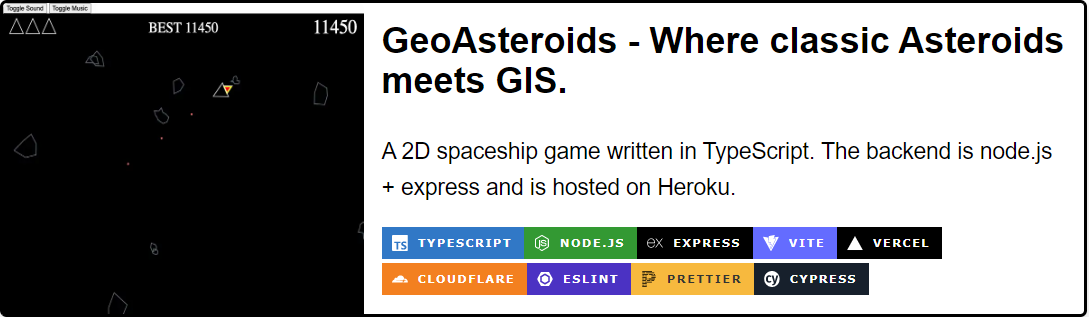
If the project preview card piques the user's interest, they will click on the project to learn more.
Things to Keep in mind#
- Is my project accessible? What did I learn about accessibility while building this project? Describing how I tested my project using keyboard navigation or a screen reader can make for a compelling story!
- Have I included the most relevant screenshot in the thumbnail and sprinkled screenshots of the project throughout the different sections?
- Is the project responsive? Does it work well on mobile and desktop? How about if cookies are disabled or JavaScript is disabled?
- Does each section cater to people skimming and people reading everything?
- Does it make sense to include a live demo or a video recording?
- Can a recruiter, hiring manager, and developer obtain the information they need to know to determine if I am a good fit for the available opportunity?
- I only want to showcase 3-5 of my best projects. Is it good enough to replace an existing project if considering a new project?
Additional Resources#
Building an Effective Dev Portfolio - Josh Comeau