 Solly's Blog
Keto
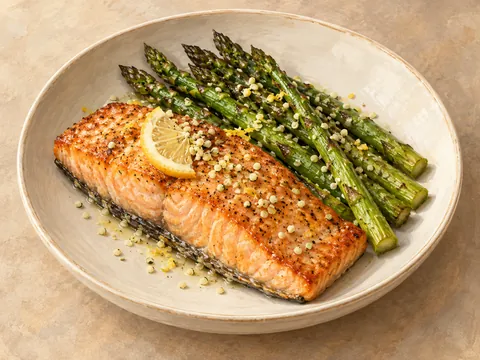
Lemon salmon and asparagus
- Active time
- 8min
- Net carbs per 4 servings
- 13 g
- Appliances needed
15 recipes · 4 servings each · US cooking measures
Each recipe starts on a new page. Safe doneness and appliance capacity take priority over the time estimate.
Keto · 4 servings · US measures · 8 min active per original four-serving batch
Lemon salmon with asparagus and garlic.
No mid-cook action; remove fish and asparagus separately at their endpoints.
The listed pan and basket capacity, cook times, and thermometer endpoint are for four servings.
Ingredients are scaled; keep food thickness, spacing, settings and safe endpoints fixed. Timings assume the four-serving batch and specified shortcuts. More food can require additional batches.
These newly designed recipes have not been cooked, tasted or stopwatch-tested. Nutrition is an ingredient estimate, not laboratory analysis. Sources support safety, labels or comparable methods; they do not validate this exact recipe.
Read left to right. Each merged cell acts on the ingredient rows feeding into it. Parallel branches stay separate until plating.
| Preheat both air fryers to 390°F. Start both baskets together; remove each component at its own endpoint. | |||
| Use uncrowded baskets with room for the full batch; keep 1-inch-thick salmon fillets apart and medium asparagus out of a dense pile. | |||
| Pat thawed, 1-inch-thick salmon fillets dry. | Rub dry salmon with oil, garlic, salt, pepper and zest. Then: Salmon basket: skin-side down with gaps; air fry at 390°F for 10–14 min, check at 10 min; reach 145°F. | Plate salmon and asparagus separately; finish both with lemon juice and hemp. | |
| Toss trimmed, medium asparagus with oil, garlic and salt. Then: Asparagus basket: spread without a dense pile; air fry at 390°F for 7–10 min, check at 7 min; remove when ready. | |||
Prepare cold sides first. Keep raw-poultry tools separate; use clean serving utensils. Probe more than one thick piece. A timer is not a doneness test.
Preheat both fryers to 390°F. Toss asparagus with half the oil, half the garlic, and half the salt. Spread in one basket without a dense pile.
Pat salmon dry. Rub with remaining oil, garlic, salt, pepper, and zest. Put skin-side down in the other basket with gaps between fillets. Start both together.
Check asparagus at 7 minutes; medium stalks usually need 7–10. Check salmon at 10 minutes; allow 10–14 to reach 145°F. Remove each when ready. Finish with lemon juice and hemp.
Toss and load separate baskets; preheat overlaps prep.
Check asparagus at 7 min and salmon at 10 min; remove each separately.
Check fish at 145°F; add lemon and hemp.
Stages can overlap. Do not add every row as separate elapsed time. Safe endpoints and actual appliance behavior override the estimate.
If either basket cannot hold its full batch, use two half-sheet pans at 425°F: fish about 12–18 min, asparagus 10–15 min; allow 25–35 min total.
Lemon brightens the salmon; hemp adds a mild nutty finish without another cooking step.
468 kcal · 39 g protein · 6 g total carbohydrate · 3 g fiber · 3 g net carbohydrate
Listed allergens: fish. Check purchased labels and cross-contact.
Refrigerate in shallow containers within two hours, or one hour above 90°F. Use within 3–4 days or freeze; reheat to 165°F. Keep cold greens and yogurt separate.
Sources support safety, labels or comparable methods. They do not validate this exact newly designed recipe.
Keto · 4 servings · US measures · 12 min active per original four-serving batch
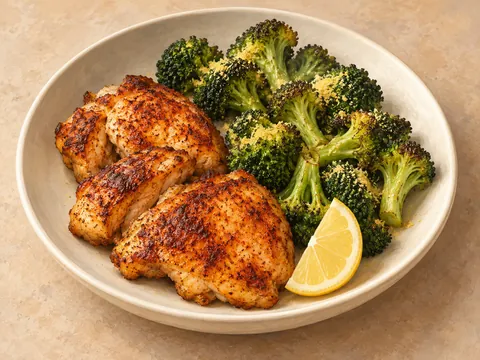
Smoky chicken thighs with roasted broccoli.
Start broccoli five minutes after chicken; shake broccoli once.
The listed pan and basket capacity, cook times, and thermometer endpoint are for four servings.
Ingredients are scaled; keep food thickness, spacing, settings and safe endpoints fixed. Timings assume the four-serving batch and specified shortcuts. More food can require additional batches.
These newly designed recipes have not been cooked, tasted or stopwatch-tested. Nutrition is an ingredient estimate, not laboratory analysis. Sources support safety, labels or comparable methods; they do not validate this exact recipe.
Read left to right. Each merged cell acts on the ingredient rows feeding into it. Parallel branches stay separate until plating.
| Preheat both air fryers to 390°F. Start chicken first; start broccoli 5 min later. | |||
| Use uncrowded baskets; thighs must be unfolded and no more than ¾ inch thick. | |||
| Coat unfolded thighs with oil, paprika, garlic, oregano, salt and pepper. Then: Chicken basket: smooth-side up, no overlap; air fry at 390°F for 16–22 min; thickest pieces must reach 165°F. | Plate cooked chicken and finished broccoli as separate components. | ||
| Toss 1½-inch broccoli florets with oil and salt; load without crowding. Then: Broccoli basket: start 5 min after chicken; air fry at 390°F for 10–14 min, shake once halfway; stems fork-tender, crowns lightly browned. | Finish cooked broccoli with lemon juice and nutritional yeast. | ||
Prepare cold sides first. Keep raw-poultry tools separate; use clean serving utensils. Probe more than one thick piece. A timer is not a doneness test.
Preheat both fryers to 390°F. Toss broccoli with half the oil and one third of the salt; load one basket without crowding. In a separate bowl coat chicken with the remaining oil and salt, paprika, garlic, oregano, and pepper.
Put unfolded thighs smooth-side up in the other basket without overlapping. Start chicken. Five minutes later, start broccoli.
Shake broccoli once halfway through its 10–14-minute cook. Chicken usually needs 16–22 minutes; check the thickest pieces for 165°F. No chicken flip is required, though the underside browns less. Finish broccoli with lemon and nutritional yeast. Broccoli is ready when stems are fork-tender and crowns are lightly browned; time alone is not its endpoint.
Start chicken first; preheat overlaps prep.
Load broccoli basket.
Shake broccoli once halfway; check chicken thickest pieces for 165°F.
Add lemon and yeast after cooking.
Stages can overlap. Do not add every row as separate elapsed time. Safe endpoints and actual appliance behavior override the estimate.
If baskets cannot hold the batch, use two oven pans at 425°F for about 20–25 min; allow 35–40 min total and check chicken for 165°F.
Smoked paprika and oregano season the thighs while lemon and yeast sharpen the broccoli after cooking.
317 kcal · 38 g protein · 10 g total carbohydrate · 4 g fiber · 6 g net carbohydrate
Listed allergens: None in the specified ingredients. Check purchased labels and cross-contact.
Refrigerate in shallow containers within two hours, or one hour above 90°F. Use within 3–4 days or freeze; reheat to 165°F. Keep cold greens and yogurt separate.
Sources support safety, labels or comparable methods. They do not validate this exact newly designed recipe.
Keto · 4 servings · US measures · 11 min active per original four-serving batch
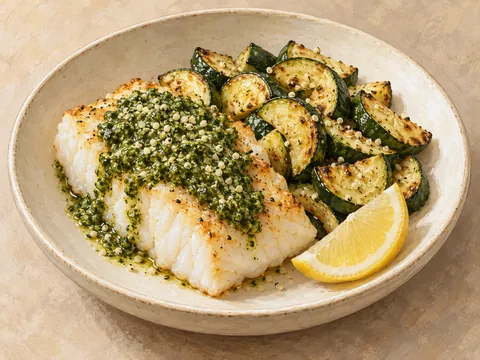
Pesto cod with zucchini.
One scheduled fish-pan addition, then separate vegetable/fish endpoint checks.
The listed pan and basket capacity, cook times, and thermometer endpoint are for four servings.
Ingredients are scaled; keep food thickness, spacing, settings and safe endpoints fixed. Timings assume the four-serving batch and specified shortcuts. More food can require additional batches.
These newly designed recipes have not been cooked, tasted or stopwatch-tested. Nutrition is an ingredient estimate, not laboratory analysis. Sources support safety, labels or comparable methods; they do not validate this exact recipe.
Read left to right. Each merged cell acts on the ingredient rows feeding into it. Parallel branches stay separate until plating.
| Heat oven to 425°F on bake. Use two separate 18×13-inch rimmed metal half-sheet pans. | |||
| Start zucchini first; add fish pan 6 min later. Remove each pan at its own endpoint and serve promptly. | |||
| Pat thawed, 1-inch-thick cod dry; rub with oil and place on its own pan. Then: Fish pan: add 6 min after zucchini; roast at 425°F for 12–18 min, check at 12 min of fish cooking; reach 145°F. | Spoon pesto over cooked fish after roasting. | Plate pesto-topped cod and zucchini separately; finish both with lemon juice and hemp. | |
| Toss ½-inch zucchini half-moons with oil, salt and pepper; spread on separate pan. Then: Zucchini pan: roast at 425°F for 18–23 min; check at 18 min of zucchini cooking; browned edges and tender center. | |||
Prepare cold sides first. Keep raw-poultry tools separate; use clean serving utensils. Probe more than one thick piece. A timer is not a doneness test.
Heat the oven to 425°F. Toss zucchini with three quarters of the oil, salt, and pepper. Spread on one half-sheet pan. Pat fish dry, rub with the remaining oil, and place on the other pan.
Start the zucchini pan first. After 6 minutes, add the fish pan. Check zucchini from 18 minutes of its own cooking time for browned edges and a tender center; allow about 18–23 minutes. Check fish after 12 minutes of its own cooking time; allow about 12–18 minutes to reach 145°F. Remove each pan at its endpoint and serve promptly. If either needs longer, keep checking; do not overcook the fish to match the vegetables.
Spoon pesto over cooked fish. Finish fish and zucchini with lemon and hemp. Applying pesto after cooking keeps its basil flavor and avoids burning the sauce.
Preheat overlaps prep; fish and zucchini get separate pans.
Add fish pan after 6 minutes: one scheduled main-appliance action.
Check zucchini for browned edges and tenderness; fish must reach 145°F. Remove separately at their endpoints.
Spoon pesto on fish; add lemon and hemp and serve promptly.
Stages can overlap. Do not add every row as separate elapsed time. Safe endpoints and actual appliance behavior override the estimate.
Separating wet zucchini keeps cod from steaming in vegetable liquid; pesto stays fresh when added after heat.
328 kcal · 34 g protein · 7 g total carbohydrate · 2 g fiber · 5 g net carbohydrate
Listed allergens: fish, milk, tree-nuts. Check purchased labels and cross-contact.
Refrigerate in shallow containers within two hours, or one hour above 90°F. Use within 3–4 days or freeze; reheat to 165°F. Keep cold greens and yogurt separate.
Sources support safety, labels or comparable methods. They do not validate this exact newly designed recipe.
Keto · 4 servings · US measures · 15 min active per original four-serving batch
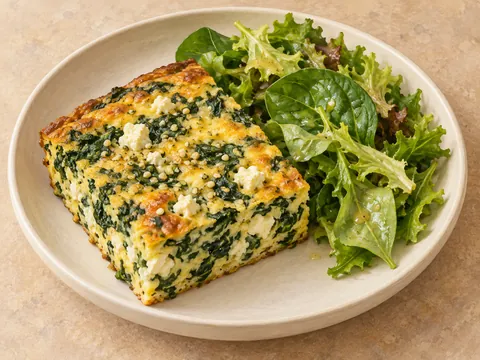
Spinach, feta and hemp frittata with salad.
No mid-cook action; toss salad while the frittata bakes.
The listed pan and basket capacity, cook times, and thermometer endpoint are for four servings.
Ingredients are scaled; keep food thickness, spacing, settings and safe endpoints fixed. Timings assume the four-serving batch and specified shortcuts. More food can require additional batches.
These newly designed recipes have not been cooked, tasted or stopwatch-tested. Nutrition is an ingredient estimate, not laboratory analysis. Sources support safety, labels or comparable methods; they do not validate this exact recipe.
Read left to right. Each merged cell acts on the ingredient rows feeding into it. Parallel branches stay separate until plating.
| Heat oven to 375°F on bake. Microwave spinach during preheating. | ||||
| Use one 9-inch square metal dish, at least 2 inches deep, for 2 or 4 servings; use two matching dishes for 6 or 8. Keep the mixture no deeper than the original four-serving layer. | ||||
| Bowl: whisk eggs, water, garlic, salt and pepper. | Stir squeezed spinach, feta, hemp and yeast into whisked eggs. | Transfer to selected greased dishes; divide so the mixture is no deeper than the original four-serving layer. Then: Bake at 375°F for 25–30 min for the four-serving layer; at 2 servings check from 18 min; center set and 160°F. Then: Rest frittata 3 min, then cut into the selected number of equal portions. | Plate equal portions of rested frittata with the separate dressed-greens salad. | |
| Microwave spinach according to package directions. Then: Fine-mesh sieve: cool spinach until safe to handle, then press very dry with a spoon. | ||||
| Grease selected metal baking dishes with oil. | ||||
| During baking, toss greens with oil and lemon juice. | ||||
Prepare cold sides first. Keep raw-poultry tools separate; use clean serving utensils. Probe more than one thick piece. A timer is not a doneness test.
Heat the oven to 375°F. Heat spinach in the microwave according to its package during preheating, then let it cool until safe to handle and press very dry in a fine-mesh sieve with a spoon. Do not squeeze hot spinach with bare hands. Use one quarter of the oil to grease one 9-inch square metal dish for two or four servings, or two matching dishes for six or eight; each must be at least 2 inches deep.
Whisk eggs, water, garlic, salt, and pepper. Stir in squeezed spinach, feta, hemp, and yeast. Divide between the selected dishes so the mixture is no deeper than the original four-serving layer.
For the original four-serving layer, bake about 25–30 minutes; for the thinner two-serving layer, begin checking at 18 minutes, until the center is set and reaches 160°F. Toss greens with the remaining oil and lemon during baking. Rest the frittata for 3 minutes before cutting into the selected number of equal adult portions.
Microwave spinach per package, cool enough to handle and press dry while preheating; oil dish and whisk mixture. Cooling or thawing delays can add time.
No mid-cook action; make salad during bake. Check center for 160°F.
Cut into the selected number of equal adult portions.
Stages can overlap. Do not add every row as separate elapsed time. Safe endpoints and actual appliance behavior override the estimate.
Dry spinach prevents a watery center; feta, hemp, and yeast add savory depth.
408 kcal · 30 g protein · 10 g total carbohydrate · 5 g fiber · 5 g net carbohydrate
Listed allergens: egg, milk. Check purchased labels and cross-contact.
Refrigerate in shallow containers within two hours, or one hour above 90°F. Use within 3–4 days or freeze; reheat to 165°F. Keep cold greens and yogurt separate.
Sources support safety, labels or comparable methods. They do not validate this exact newly designed recipe.
Keto · 4 servings · US measures · 20 min active per original four-serving batch
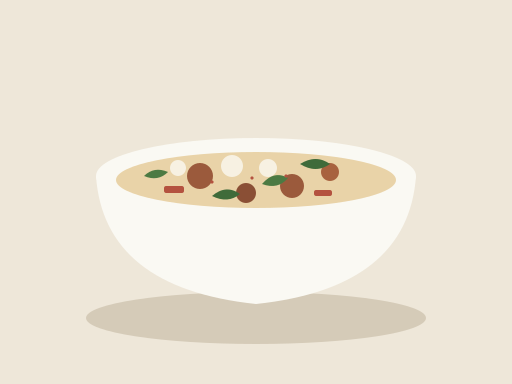
Creamy Instant Pot soup with chicken Italian sausage, turkey bacon, cauliflower and kale.
Sauté first, then quick release after 5 minutes; stir in cream and kale.
The listed pan and basket capacity, cook times, and thermometer endpoint are for four servings.
Ingredients are scaled; keep food thickness, spacing, settings and safe endpoints fixed. Timings assume the four-serving batch and specified shortcuts. More food can require additional batches.
These newly designed recipes have not been cooked, tasted or stopwatch-tested. Nutrition is an ingredient estimate, not laboratory analysis. Sources support safety, labels or comparable methods; they do not validate this exact recipe.
Read left to right. Each merged cell acts on the ingredient rows feeding into it. Parallel branches stay separate until plating.
| Remove sausage casings; chop bacon, onion and kale; mince garlic. | ||||
| Sauté sausage and turkey bacon in the Instant Pot, then onion and red pepper. | Add garlic briefly. | Add broth, scrape the bottom, then add cauliflower. Then: High pressure: 5 min, Keep Warm off. Quick release; open after the float drops. Sausage must reach 165°F. | Stir in cream and kale; thicken with xanthan if using. Serve with Parmesan if using. | |
Prepare cold sides first. Keep raw-poultry tools separate; use clean serving utensils. Probe more than one thick piece. A timer is not a doneness test.
Dice the onion, mince the garlic, chop the turkey bacon and kale, and cut cauliflower into bite-size florets. Remove sausage casings. Keep raw sausage, its board and utensils away from the kale and cream.
Set the Instant Pot to Sauté. Brown the sausage, breaking it up, with the turkey bacon. Add the onion and crushed red pepper and cook until the onion softens. Add the garlic for about 30 seconds. Turn Sauté off.
Add the broth and scrape up browned bits so the pot does not trigger a burn warning. Add the cauliflower. Seal, switch Keep Warm off, and cook at high pressure for 5 minutes. Stay under PC MAX.
Quick release according to your manual, keeping clear of steam; vent in short bursts if the soup sputters. Open only after the float valve drops. Check the sausage reaches 165°F. Stir in the cream and kale until the kale wilts. Sprinkle in xanthan while stirring if you want a thicker soup. Serve with Parmesan if using.
Brown sausage and turkey bacon, then onion, red pepper and garlic.
Deglaze with broth before sealing; Keep Warm off.
Countdown starts after pressure is reached.
Quick release, open after the float drops, then stir in cream and kale.
Stages can overlap. Do not add every row as separate elapsed time. Safe endpoints and actual appliance behavior override the estimate.
Chicken sausage and turkey bacon replace pork, and cauliflower stands in for potatoes to keep the soup keto.
220 kcal · 13 g protein · 7 g total carbohydrate · 2 g fiber · 6 g net carbohydrate
Listed allergens: milk. Check purchased labels and cross-contact.
Refrigerate in shallow containers within two hours, or one hour above 90°F. Use within 3–4 days or freeze; reheat to 165°F. Keep cold greens and yogurt separate.
Sources support safety, labels or comparable methods. They do not validate this exact newly designed recipe.
Keto main + family starch · 4 servings · US measures · 14 min active per original four-serving batch
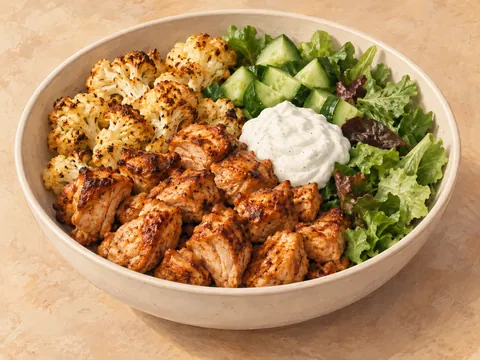
Shawarma-spiced chicken, cauliflower and lemon yogurt.
Heat one separate starch while roasting; optional rack swap.
The listed pan and basket capacity, cook times, and thermometer endpoint are for four servings.
Ingredients are scaled; keep food thickness, spacing, settings and safe endpoints fixed. Timings assume the four-serving batch and specified shortcuts. More food can require additional batches.
These newly designed recipes have not been cooked, tasted or stopwatch-tested. Nutrition is an ingredient estimate, not laboratory analysis. Sources support safety, labels or comparable methods; they do not validate this exact recipe.
Read left to right. Each merged cell acts on the ingredient rows feeding into it. Parallel branches stay separate until plating.
| Warm the family side per package near the end of cooking; serve separately. | |||
| Prepare cucumber and greens. | Plate shawarma bowls: greens, cucumber, cooked chicken and cauliflower, yogurt sauce and remaining lemon. | ||
| Mix yogurt sauce. | |||
| Toss cauliflower with oil and spices on its own 18×13-inch pan. | Heat oven to 425°F on bake. Roast both pans for 18–23 min, until chicken reaches 165°F and cauliflower is tender. | ||
| Toss chicken with oil and spices on its own 18×13-inch pan. | |||
320g Cooked rice
fully cooked, ready to heat · About ½ cup per non-keto diner; heat ready-cooked rice. Buy at least 320 g for four.
Prepare cold sides first. Keep raw-poultry tools separate; use clean serving utensils. Probe more than one thick piece. A timer is not a doneness test.
Heat the oven to 425°F. Prepare cucumber and greens. Mix yogurt with its garlic, a pinch of salt and half the lemon juice. Toss cauliflower and chicken with their own oil and spice portions and half the remaining salt on separate 18×13-inch pans.
Roast for 18–23 minutes, checking the largest chicken pieces for 165°F and cauliflower for tenderness. If your oven browns unevenly, swap racks halfway.
Near the end of roasting, if serving non-keto diners, microwave ready-to-eat rice or briefly warm the chosen pita according to its package. Assemble greens, cucumber, chicken and cauliflower. Add the prepared yogurt sauce and remaining lemon. Put starch on family plates only.
Prepare cold sides and seasoned yogurt sauce first; split remaining spice oil between cauliflower and chicken.
Check largest chicken pieces for 165°F and cauliflower for browned edges and tenderness; optional rack swap if browning unevenly. Heat ready family starch near serving.
Assemble with prepared yogurt sauce and remaining lemon; starch on family plates only.
Stages can overlap. Do not add every row as separate elapsed time. Safe endpoints and actual appliance behavior override the estimate.
Warm spices coat small chicken pieces and cauliflower; cold lemon yogurt balances them.
339 kcal · 40 g protein · 12 g total carbohydrate · 4 g fiber · 8 g net carbohydrate
Listed allergens: milk. Check purchased labels and cross-contact.
Refrigerate in shallow containers within two hours, or one hour above 90°F. Use within 3–4 days or freeze; reheat to 165°F. Keep cold greens and yogurt separate.
Sources support safety, labels or comparable methods. They do not validate this exact newly designed recipe.
Keto main + family starch · 4 servings · US measures · 14 min active per original four-serving batch
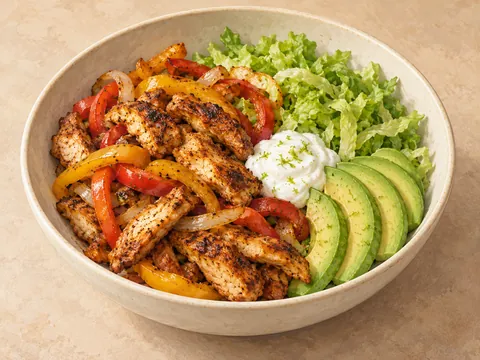
Chicken fajitas with roasted peppers and onions.
Heat tortillas during the roast; optional rack swap.
The listed pan and basket capacity, cook times, and thermometer endpoint are for four servings.
Ingredients are scaled; keep food thickness, spacing, settings and safe endpoints fixed. Timings assume the four-serving batch and specified shortcuts. More food can require additional batches.
These newly designed recipes have not been cooked, tasted or stopwatch-tested. Nutrition is an ingredient estimate, not laboratory analysis. Sources support safety, labels or comparable methods; they do not validate this exact recipe.
Read left to right. Each merged cell acts on the ingredient rows feeding into it. Parallel branches stay separate until plating.
| Heat oven to 425°F on bake; use two 18×13-inch half-sheet pans. | ||||
| Warm the family side per package near the end of cooking; serve separately. | ||||
| Prepare lettuce and avocado. | Plate fajita bowls with cold lettuce, lime-finished filling, avocado and yogurt. | |||
| Mix oil and seasoning. | Toss peppers and onion with half the seasoned oil; coat chicken separately with the rest. Spread on two half-sheet pans in a single layer, pieces apart. Then: Bake at 425°F for 18–22 min; largest chicken strips must reach 165°F. No stir if spaced; swap racks halfway if needed. | Finish cooked fajita filling with lime. | ||
8 count Corn tortillas
ready to eat; warm according to package · Two 6-inch tortillas totaling about 50 g per non-keto diner; check the package for wheat or gluten cross-contact. Serve alongside the bowl or fill with part of the filling; two small tortillas will not hold the whole meal.
Prepare cold sides first. Keep raw-poultry tools separate; use clean serving utensils. Probe more than one thick piece. A timer is not a doneness test.
Heat the oven to 425°F. Prepare lettuce and avocado first. Mix oil, spices, and salt. Toss peppers and onion with half the mixture. Coat chicken separately with the rest.
Divide chicken and vegetables between two half-sheet pans in a single layer, keeping pieces apart. Bake about 18–22 minutes, until the largest chicken strips reach 165°F. No stir is needed if there is enough space; swap racks halfway if needed for your oven.
Finish with lime. Make keto bowls with lettuce, filling, avocado, and yogurt. Near the end of cooking, if serving non-keto diners, heat tortillas in the microwave according to their package for family portions; keep them wrapped until serving. Serve the measured two tortillas alongside each family bowl or fill them with part of the mixture; the full bowl portion is larger than two small tacos.
Prepare lettuce and avocado before raw poultry; separate chicken and vegetables on pans.
Check largest chicken strips for 165°F; swap racks if needed. Heat tortillas during cook.
Add lime; assemble measured keto bowls and separate family tortillas.
Stages can overlap. Do not add every row as separate elapsed time. Safe endpoints and actual appliance behavior override the estimate.
Roasting spaced strips concentrates pepper flavor; lime, avocado, and yogurt round out the bowl.
378 kcal · 37 g protein · 13 g total carbohydrate · 6 g fiber · 7 g net carbohydrate
Listed allergens: milk. Check purchased labels and cross-contact.
Refrigerate in shallow containers within two hours, or one hour above 90°F. Use within 3–4 days or freeze; reheat to 165°F. Keep cold greens and yogurt separate.
Sources support safety, labels or comparable methods. They do not validate this exact newly designed recipe.
Keto main + family starch · 4 servings · US measures · 15 min active per original four-serving batch
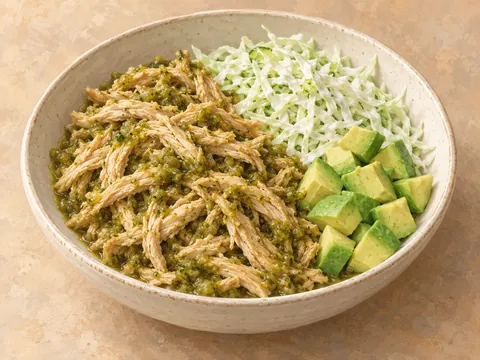
Salsa verde chicken with avocado and cabbage slaw.
Controlled pressure release, safety check, and shredding at the end; time has a long tail.
The listed pan and basket capacity, cook times, and thermometer endpoint are for four servings.
Ingredients are scaled; keep food thickness, spacing, settings and safe endpoints fixed. Timings assume the four-serving batch and specified shortcuts. More food can require additional batches.
These newly designed recipes have not been cooked, tasted or stopwatch-tested. Nutrition is an ingredient estimate, not laboratory analysis. Sources support safety, labels or comparable methods; they do not validate this exact recipe.
Read left to right. Each merged cell acts on the ingredient rows feeding into it. Parallel branches stay separate until plating.
| Prepare slaw and avocado while pressure builds. | |||
| Warm the family side per package near the end of cooking; serve separately. | |||
| Add broth, cumin, garlic and thighs; reserve salsa. High pressure: 8 min, Keep Warm off. Then: Natural release: 10 min, then vent. Open after the float drops. Then: Cook to 165°F, then shred. | Mix with salsa, remaining lime and enough broth to moisten. | Plate salsa-verde chicken over cold slaw, with avocado. | |
| Toss cabbage with yogurt and half the lime. | |||
| Slice avocado. | |||
320g Cooked rice
fully cooked, ready to heat · About ½ cup per non-keto diner; heat ready-cooked rice. Buy at least 320 g for four.
Prepare cold sides first. Keep raw-poultry tools separate; use clean serving utensils. Probe more than one thick piece. A timer is not a doneness test.
Put the broth, cumin, garlic, and separated thighs in the Duo 6QT. Leave salsa out. Seal, switch Keep Warm off, and set high pressure for 8 minutes. The broth amount is the 6QT minimum; follow your model’s higher minimum if required and stay under PC MAX.
During pressurization, prepare avocado and mix cabbage with yogurt and half the lime. If serving non-keto diners, leave ready-to-eat family rice for microwave heating near serving, according to its package. Keep cold sides away from raw-poultry equipment.
When pressure cooking ends, leave the valve at Seal for 10 minutes. Then vent according to your manual, keeping clear of steam. Open only after the float valve drops. Check the thickest thighs for 165°F. If needed, finish cooking in the liquid and recheck; that adds time.
Lift onto a clean board and shred. If safely cooked thighs resist shredding, slice or chop them rather than forcing a longer cook for texture alone. Mix with salsa, remaining lime, and only enough broth to moisten. Divide over slaw with avocado. Near serving, if needed, microwave family rice per package and add only to family bowls. Reserve excess broth; no reduction is required.
Broth, spices, thighs only; seal and turn Keep Warm off. Make slaw during build; heat ready family rice near serving.
Countdown starts after pressure is reached.
Leave sealed for 10 min; vent per manual, open only after float drops. Probe thighs for 165°F.
Shred on clean board, or slice safely cooked thighs if resistant; mix salsa, lime and only enough broth to moisten. Heat ready family rice near serving.
Stages can overlap. Do not add every row as separate elapsed time. Safe endpoints and actual appliance behavior override the estimate.
Salsa after pressure cooking keeps its tang and meets the cooker’s need for thin liquid during pressure buildup.
327 kcal · 39 g protein · 14 g total carbohydrate · 5 g fiber · 8 g net carbohydrate
Listed allergens: milk. Check purchased labels and cross-contact.
Refrigerate in shallow containers within two hours, or one hour above 90°F. Use within 3–4 days or freeze; reheat to 165°F. Keep cold greens and yogurt separate.
Sources support safety, labels or comparable methods. They do not validate this exact newly designed recipe.
Keto main + family starch · 4 servings · US measures · 15 min active per original four-serving batch
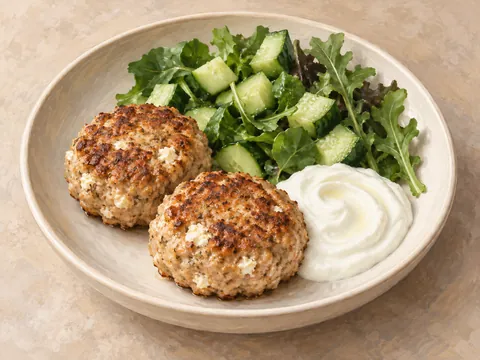
Greek turkey patties with cucumber salad and yogurt.
Flip patties once; heat one family bread choice during cooking.
The listed pan and basket capacity, cook times, and thermometer endpoint are for four servings.
Ingredients are scaled; keep food thickness, spacing, settings and safe endpoints fixed. Timings assume the four-serving batch and specified shortcuts. More food can require additional batches.
These newly designed recipes have not been cooked, tasted or stopwatch-tested. Nutrition is an ingredient estimate, not laboratory analysis. Sources support safety, labels or comparable methods; they do not validate this exact recipe.
Read left to right. Each merged cell acts on the ingredient rows feeding into it. Parallel branches stay separate until plating.
| Preheat both air fryers to 380°F. Arrange four patties per basket with gaps. | |||
| If scaled egg is half an egg: beat one whole egg and weigh about 25 g. | |||
| Warm the family side per package near the end of cooking; serve separately. | |||
| Prepare cucumber and greens. | Plate two cooked turkey patties per serving with cold cucumber, greens and lemon-yogurt sauce. | ||
| Mix yogurt and lemon. | |||
| Mix turkey, egg, flax, feta and seasoning just until combined. Then: Form patties about 100 g each, 3¼ inches across and ¾ inch thick; about two per serving. | Lightly oil both baskets; load patties with gaps. Four per basket for base batch only if they fit; do not cram. Then: Air fry at 380°F for 14–18 min, flipping once halfway; each patty must reach 165°F. | ||
240g Pita
ready to eat; warm briefly · One ready-to-eat 60 g pita per non-keto diner; warm briefly. Contains wheat; check package. Serve pita alongside both patties and salad.
Prepare cold sides first. Keep raw-poultry tools separate; use clean serving utensils. Probe more than one thick piece. A timer is not a doneness test.
Preheat both fryers to 380°F. Prepare cucumber, greens, and yogurt mixed with lemon first. Mix turkey, egg, flax, feta, oregano, garlic, salt, and pepper just until combined. If the scaled egg amount is half an egg, beat one whole egg and use half by weight, about 25 g.
Form patties about 100 g each, 3¼ inches across and ¾ inch thick; allow about two per adult. Oil baskets lightly. In the four-serving batch, put four patties in each only if they fit with gaps; about 8×8 inches of usable flat space per basket is a starting fit check. Do not cram them in.
Cook about 14–18 minutes, flipping once halfway, until each patty reaches 165°F. If serving non-keto diners, warm the chosen family bread during cooking. Serve patties with cucumber, greens, and yogurt sauce. A family bun is one double-patty serving, or put one patty in the bun and the other beside it; pita goes alongside the full plate.
Prepare cold sides first; mix lightly and form patties roughly 100 g each, 3¼ inches across and ¾ inch thick.
Four patties per basket only if gaps remain; flip once halfway, check each for 165°F. Warm one bread choice during cook.
Two patties per person with cucumber, greens, and yogurt.
Stages can overlap. Do not add every row as separate elapsed time. Safe endpoints and actual appliance behavior override the estimate.
If patties do not fit with gaps, bake on half-sheet pans at 425°F for about 18–22 min; check every patty for 165°F. Four-serving base batch can fit on one pan; larger batches may need more pans or rounds. Allow 35–40 min for the base batch.
Ground flax binds the turkey; feta and lemon yogurt keep a lean patty from tasting flat.
378 kcal · 40 g protein · 8 g total carbohydrate · 2 g fiber · 5 g net carbohydrate
Listed allergens: egg, milk, wheat. Check purchased labels and cross-contact.
Refrigerate in shallow containers within two hours, or one hour above 90°F. Use within 3–4 days or freeze; reheat to 165°F. Keep cold greens and yogurt separate.
Sources support safety, labels or comparable methods. They do not validate this exact newly designed recipe.
Not Keto · 4 servings · US measures · 10 min active per original four-serving batch
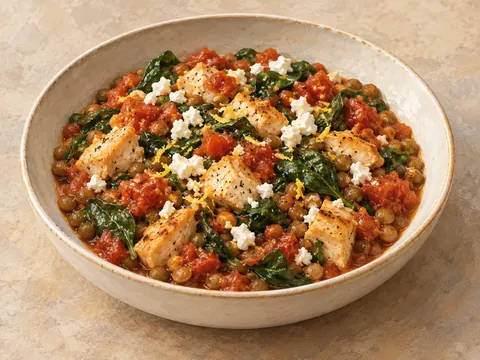
Chicken and lentils baked in tomato sauce.
No mid-cook action; probe several spots before serving.
The listed pan and basket capacity, cook times, and thermometer endpoint are for four servings.
Ingredients are scaled; keep food thickness, spacing, settings and safe endpoints fixed. Timings assume the four-serving batch and specified shortcuts. More food can require additional batches.
These newly designed recipes have not been cooked, tasted or stopwatch-tested. Nutrition is an ingredient estimate, not laboratory analysis. Sources support safety, labels or comparable methods; they do not validate this exact recipe.
Read left to right. Each merged cell acts on the ingredient rows feeding into it. Parallel branches stay separate until plating.
| Preheat oven to 425°F (bake). Use a shallow 13×9-inch metal baking dish, foil and an instant-read thermometer. | |||
| Use fully cooked, refrigerated chicken chopped no larger than ¾ inch; raw chicken, dry lentils and frozen chicken blocks are not substitutes. Drain and rinse canned lentils; retain tomato juice; roughly chop spinach. | |||
| Keep the mixed bake no more than 1 inch deep; split into shallow dishes if needed. | |||
| Mix in shallow metal baking dish. | Fold in fully cooked chicken; spread and gently press to an even layer ≤1 inch deep. Then: Cover tightly with foil; bake at 425°F about 20–25 min, until center and several chicken pieces reach 165°F; continue if needed. | Finish baked mixture with lemon and feta. Then: Plate finished meal: divide the moist bake equally among selected portions. | |
Prepare cold sides first. Keep raw-poultry tools separate; use clean serving utensils. Probe more than one thick piece. A timer is not a doneness test.
Heat the oven to 425°F. In a 13×9-inch shallow metal baking dish, mix lentils, tomatoes, spinach, oil, spices, and salt. Fold in cooked chicken. Spread and gently press to an even layer no more than 1 inch deep; split into two shallow dishes if needed.
Cover tightly with foil. Bake about 20–25 minutes. Check the center and several chicken pieces for 165°F; continue if needed.
Finish with lemon and feta, then divide into the selected number of equal adult portions. This is a moist bake.
Mix in shallow dish; keep depth no more than 1 inch, split dishes if needed. Cover tightly.
Check center and several chicken pieces for 165°F.
Add lemon and feta; divide equally.
Stages can overlap. Do not add every row as separate elapsed time. Safe endpoints and actual appliance behavior override the estimate.
A tight foil cover and tomato liquid keep precooked chicken moist while lentils heat through.
380 kcal · 41 g protein · 31 g total carbohydrate · 13 g fiber · 18 g net carbohydrate
Listed allergens: milk. Check purchased labels and cross-contact.
Refrigerate in shallow containers within two hours, or one hour above 90°F. Use within 3–4 days or freeze; reheat to 165°F. Keep cold greens and yogurt separate.
Sources support safety, labels or comparable methods. They do not validate this exact newly designed recipe.
Not Keto · 4 servings · US measures · 12 min active per original four-serving batch
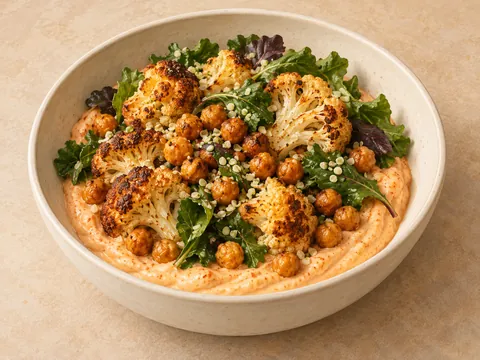
Harissa chickpeas and cauliflower with yogurt.
Stir and swap pans once halfway through roasting.
The listed pan and basket capacity, cook times, and thermometer endpoint are for four servings.
Ingredients are scaled; keep food thickness, spacing, settings and safe endpoints fixed. Timings assume the four-serving batch and specified shortcuts. More food can require additional batches.
These newly designed recipes have not been cooked, tasted or stopwatch-tested. Nutrition is an ingredient estimate, not laboratory analysis. Sources support safety, labels or comparable methods; they do not validate this exact recipe.
Read left to right. Each merged cell acts on the ingredient rows feeding into it. Parallel branches stay separate until plating.
| Preheat oven to 425°F (bake); use two 18×13-inch half-sheet pans. Drain, rinse and thoroughly pat chickpeas dry; use cauliflower florets about 1 inch across and washed salad greens. | |||
| Use the specified Mina mild harissa and the full scaled strained-yogurt amount. | |||
| Keep ingredients in a single layer. For 6 or 8 servings, use extra pans or cook in batches. | |||
| Toss dried chickpeas and cauliflower thoroughly; spread uncrowded across two pans. Then: Roast on two half-sheet pans at 425°F about 22–25 min; stir once and swap racks halfway; cauliflower tender and browned, chickpeas soft inside. | Plate finished meal: divide all cold yogurt sauce equally among plates; add greens and roast, then hemp. | ||
| Mix roasting dressing. | |||
| During roasting, mix cold yogurt sauce in a separate bowl. | |||
Prepare cold sides first. Keep raw-poultry tools separate; use clean serving utensils. Probe more than one thick piece. A timer is not a doneness test.
Heat the oven to 425°F. Mix oil, half the harissa, cumin and half the salt. Toss thoroughly dried chickpeas and cauliflower with it. Spread across two half-sheet pans without crowding.
Roast for about 22–25 minutes, stirring once and swapping racks halfway, until cauliflower is tender and browned. Chickpeas should still be soft inside.
During roasting, mix yogurt with the remaining harissa and salt, lemon, garlic and pepper. Divide all the yogurt evenly among the selected number of plates, then add greens and roasted ingredients. Finish with hemp. This uses the specified mild harissa; hotter concentrated pastes do not inherit the same quantity or nutrition.
Dry rinsed chickpeas; toss with cauliflower, oil, half the mild harissa, cumin and half the salt; spread over two pans.
Stir once and swap racks halfway. Mix yogurt with remaining mild harissa/salt, lemon, garlic and pepper during cooking.
Divide the full scaled yogurt amount equally among plates; add greens, roast, and hemp.
Stages can overlap. Do not add every row as separate elapsed time. Safe endpoints and actual appliance behavior override the estimate.
Cumin-roasted cauliflower and soft-centered chickpeas meet a cold lemon-harissa yogurt sauce. Splitting the mild harissa between roast and sauce keeps some pepper flavor out of the oven; a little salt seasons the full yogurt portion.
426 kcal · 29 g protein · 45 g total carbohydrate · 12 g fiber · 33 g net carbohydrate
Listed allergens: milk. Check purchased labels and cross-contact.
Refrigerate in shallow containers within two hours, or one hour above 90°F. Use within 3–4 days or freeze; reheat to 165°F. Keep cold greens and yogurt separate.
Sources support safety, labels or comparable methods. They do not validate this exact newly designed recipe.
Not Keto · 4 servings · US measures · 15 min active per original four-serving batch
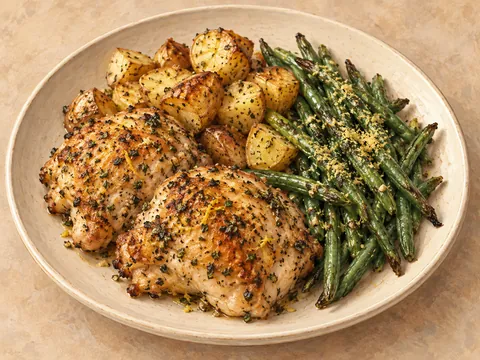
Lemon chicken with potatoes and green beans.
Microwave potatoes first; add beans and swap racks after 10 minutes.
The listed pan and basket capacity, cook times, and thermometer endpoint are for four servings.
Ingredients are scaled; keep food thickness, spacing, settings and safe endpoints fixed. Timings assume the four-serving batch and specified shortcuts. More food can require additional batches.
These newly designed recipes have not been cooked, tasted or stopwatch-tested. Nutrition is an ingredient estimate, not laboratory analysis. Sources support safety, labels or comparable methods; they do not validate this exact recipe.
Read left to right. Each merged cell acts on the ingredient rows feeding into it. Parallel branches stay separate until plating.
| Preheat oven to 425°F (bake). Use two 18×13-inch half-sheet pans, a vented microwave-safe dish, a roughly 1000 W microwave and an instant-read thermometer. | |||||
| Mix oil, oregano, garlic, zest and pepper. Reserve half for potatoes, one quarter for beans and one quarter for chicken; give each one third of the salt. | |||||
| Use thawed, unfolded thighs ≤¾ inch thick; cut potatoes no larger than ¾ inch and trim beans. Keep potatoes and beans in separate single-layer areas on one vegetable pan and chicken on its own pan. | |||||
| For 6 or 8 servings, microwave potatoes in batches until fork-tender. | |||||
| Start chicken and potatoes together; at roast minute 10 add beans to their reserved area and swap racks. Remove each component at its own endpoint. | |||||
| Coat chicken with reserved seasoning and one third of salt; unfold onto its own pan. Then: Roast chicken on separate pan at 425°F for 20–25 min, until thickest pieces reach 165°F; remove when ready. | Plate finished meal: serve cooked chicken beside vegetables; finish all with lemon juice. | ||||
| Use reserved quarter of seasoning mix. | |||||
| Microwave in vented dish on high about 6–8 min at ~1000 W until just fork-tender; carefully uncover and drain. | Coat drained potatoes with reserved seasoning and one third of salt. Then: Spread on half the vegetable pan, reserve other half; start with chicken and roast at 425°F for 10 min. | Keep beans and potatoes in separate areas; roast at 425°F another 10–15 min until both tender; remove each when ready. | Sprinkle yeast over cooked vegetables. | ||
| Use reserved half of seasoning mix. | |||||
| Coat beans with reserved seasoning and one third of salt; set aside until minute 10. Then: Add beans to reserved vegetable-pan area at roast minute 10; swap racks. | |||||
| Use reserved quarter of seasoning mix. | |||||
Prepare cold sides first. Keep raw-poultry tools separate; use clean serving utensils. Probe more than one thick piece. A timer is not a doneness test.
Heat the oven to 425°F. Put potato pieces and water in a microwave-safe dish with a vented microwave-safe cover. Microwave on high for about 6–8 minutes in a roughly 1000 W microwave, until just fork-tender, then carefully uncover and drain. Prepare the rest during this step.
Before handling raw chicken, mix the oil, oregano, garlic, zest and pepper in a clean bowl. Give half to the drained potatoes, one quarter to beans and one quarter to chicken in separate bowls; give each one third of the salt. Spread potatoes over one half of a half-sheet pan, reserving the other half for beans. Set beans aside. Put unfolded chicken on the second pan. Keep the vegetable portion and tools away from raw-poultry juices.
Roast chicken and potatoes for 20–25 minutes. Add green beans to the vegetable pan after the first 10 minutes, keeping them in a separate area rather than piling them over potatoes. Swap racks at that addition. Chicken must reach 165°F; potatoes and beans should be tender. Remove each when ready.
Finish with lemon juice. Sprinkle yeast over vegetables after cooking.
Microwave potatoes with the measured water until just fork-tender; drain carefully. Prep chicken and beans during this stage.
Potatoes on half a vegetable pan; chicken on second pan.
Add beans to reserved area and swap racks; check chicken for 165°F and vegetables for tenderness.
Add lemon; sprinkle yeast over vegetables.
Stages can overlap. Do not add every row as separate elapsed time. Safe endpoints and actual appliance behavior override the estimate.
The same lemon, garlic and oregano oil seasons the chicken and both vegetables. The microwave head start makes the potatoes tender before roasting, and delayed beans keep their texture. Lemon and yeast finish the dish after the hot oven.
422 kcal · 40 g protein · 35 g total carbohydrate · 7 g fiber · 28 g net carbohydrate
Listed allergens: None in the specified ingredients. Check purchased labels and cross-contact.
Refrigerate in shallow containers within two hours, or one hour above 90°F. Use within 3–4 days or freeze; reheat to 165°F. Keep cold greens and yogurt separate.
Sources support safety, labels or comparable methods. They do not validate this exact newly designed recipe.
Not Keto · 4 servings · US measures · 12 min active per original four-serving batch
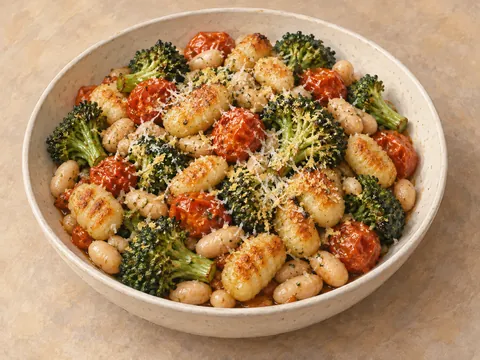
Roasted gnocchi, white beans and broccoli.
Add beans, stir, and swap racks once at minute 12.
The listed pan and basket capacity, cook times, and thermometer endpoint are for four servings.
Ingredients are scaled; keep food thickness, spacing, settings and safe endpoints fixed. Timings assume the four-serving batch and specified shortcuts. More food can require additional batches.
These newly designed recipes have not been cooked, tasted or stopwatch-tested. Nutrition is an ingredient estimate, not laboratory analysis. Sources support safety, labels or comparable methods; they do not validate this exact recipe.
Read left to right. Each merged cell acts on the ingredient rows feeding into it. Parallel branches stay separate until plating.
| Preheat oven to 425°F (bake); use two 18×13-inch half-sheet pans. Use shelf-stable, unfrozen gnocchi; do not boil first. Drain and rinse canned beans; use broccoli florets about 1½ inches across. | ||||
| Keep ingredients in a single layer. For 6 or 8 servings, use extra pans or cook in batches. | ||||
| Add half the Parmesan while warm; divide the rest among plates. | ||||
| Toss and divide across two half-sheet pans; gnocchi remain unboiled. Then: Roast at 425°F for 12 min on two half-sheet pans. | At minute 12 add oiled beans to both pans, stir everything once and swap racks. Then: Continue roasting at 425°F for 13–18 min (25–30 min total), until gnocchi centers tender and broccoli tender and browned. Then: Press a few softened tomatoes with serving spoon; toss their juices through gnocchi and beans. | While warm, toss in yeast, lemon and half the Parmesan. | Plate finished meal: divide equally among selected portions; top with remaining half of Parmesan and hemp. | |
| Toss drained, rinsed beans with remaining one third of oil. | ||||
Prepare cold sides first. Keep raw-poultry tools separate; use clean serving utensils. Probe more than one thick piece. A timer is not a doneness test.
Heat the oven to 425°F. Toss gnocchi, broccoli, and tomatoes with two thirds of the oil, oregano, garlic, salt, and pepper. Divide across two half-sheet pans. Do not boil gnocchi first.
Roast for 12 minutes. Toss beans with the remaining oil. Add them to the pans, stir everything once, and swap racks. Continue roasting for about 13–18 minutes, until gnocchi are tender inside and broccoli is tender and browned.
At the finish, press a few softened tomatoes with the serving spoon and toss their juices through the gnocchi and beans. Toss in yeast, lemon and half the Parmesan while warm; divide equally into the selected number of adult portions and top with the remaining Parmesan and hemp. The full measured Parmesan is included in the nutrition.
Toss shelf-stable unboiled gnocchi, broccoli and tomatoes with two thirds of the measured oil and seasoning; spread on two pans.
No stirring yet.
Toss drained beans with the remaining oil; add, stir all once, swap racks. Cook until gnocchi centers and broccoli are tender.
Press a few softened tomatoes and toss their juices through the gnocchi and beans; incorporate the measured finishes, with all Parmesan divided among plates.
Stages can overlap. Do not add every row as separate elapsed time. Safe endpoints and actual appliance behavior override the estimate.
Roasted shelf-stable gnocchi stays tender inside; later beans avoid drying, while Parmesan supplies protein.
604 kcal · 27 g protein · 81 g total carbohydrate · 12 g fiber · 70 g net carbohydrate
Listed allergens: milk, wheat. Check purchased labels and cross-contact.
Refrigerate in shallow containers within two hours, or one hour above 90°F. Use within 3–4 days or freeze; reheat to 165°F. Keep cold greens and yogurt separate.
Sources support safety, labels or comparable methods. They do not validate this exact newly designed recipe.
Keto main + family starch · 4 servings · US measures · 30 min active per original four-serving batch
Pan-fried turkey-feta patties with cucumber salad and lemon yogurt.
Turn each batch once; cook every patty to 165°F.
The listed pan and basket capacity, cook times, and thermometer endpoint are for four servings.
Ingredients are scaled; keep food thickness, spacing, settings and safe endpoints fixed. Timings assume the four-serving batch and specified shortcuts. More food can require additional batches.
These newly designed recipes have not been cooked, tasted or stopwatch-tested. Nutrition is an ingredient estimate, not laboratory analysis. Sources support safety, labels or comparable methods; they do not validate this exact recipe.
Read left to right. Each merged cell acts on the ingredient rows feeding into it. Parallel branches stay separate until plating.
| Heat a 12-inch nonstick frying pan over medium heat. Cook four patties per batch. | |||
| If scaled egg is half an egg: beat one whole egg and weigh about 25 g. | |||
| Warm the family side per package near the end of cooking; serve separately. | |||
| Prepare cucumber and greens. | Plate two cooked turkey patties per serving with cold cucumber, greens and lemon-yogurt sauce. | ||
| Mix yogurt and lemon. | |||
| Mix turkey, egg, flax, feta and seasoning just until combined. Then: Form patties about 100 g each, 3¼ inches across and ¾ inch thick; about two per serving. | Divide oil between batches; add oil and four patties to the heated pan. Then: Pan-fry 5–6 min per side over medium heat until each patty reaches 165°F. Cook in batches of four. | ||
240g Pita
ready to eat; warm briefly · One ready-to-eat 60 g pita per non-keto diner; warm briefly. Contains wheat; check package. Serve pita alongside both patties and salad.
Prepare cold sides first. Keep raw-poultry tools separate; use clean serving utensils. Probe more than one thick piece. A timer is not a doneness test.
Mix yogurt with lemon. Prepare cucumber and greens. Mix turkey, egg, flax, feta and seasoning just until combined. Form about two patties per serving about 100 g each, 3¼ inches across and ¾ inch thick.
Heat a 12-inch nonstick frying pan over medium heat. Divide the oil among batches. Add oil and up to four patties at a time. Cook 5–6 minutes per side, until every patty reaches 165°F. Repeat until all patties are cooked.
Serve two patties per person with cucumber, greens and lemon yogurt. Serve the selected bread alongside.
Mix sauce and form patties.
Turn once per batch and check each patty for 165°F.
Plate two patties with salad and yogurt.
Stages can overlap. Do not add every row as separate elapsed time. Safe endpoints and actual appliance behavior override the estimate.
Ground flax binds the turkey; feta and lemon yogurt keep a lean patty from tasting flat.
378 kcal · 40 g protein · 8 g total carbohydrate · 2 g fiber · 5 g net carbohydrate
Listed allergens: egg, milk, wheat. Check purchased labels and cross-contact.
Refrigerate in shallow containers within two hours, or one hour above 90°F. Use within 3–4 days or freeze; reheat to 165°F. Keep cold greens and yogurt separate.
Sources support safety, labels or comparable methods. They do not validate this exact newly designed recipe.
Not Keto · 4 servings · US measures · 15 min active per original four-serving batch
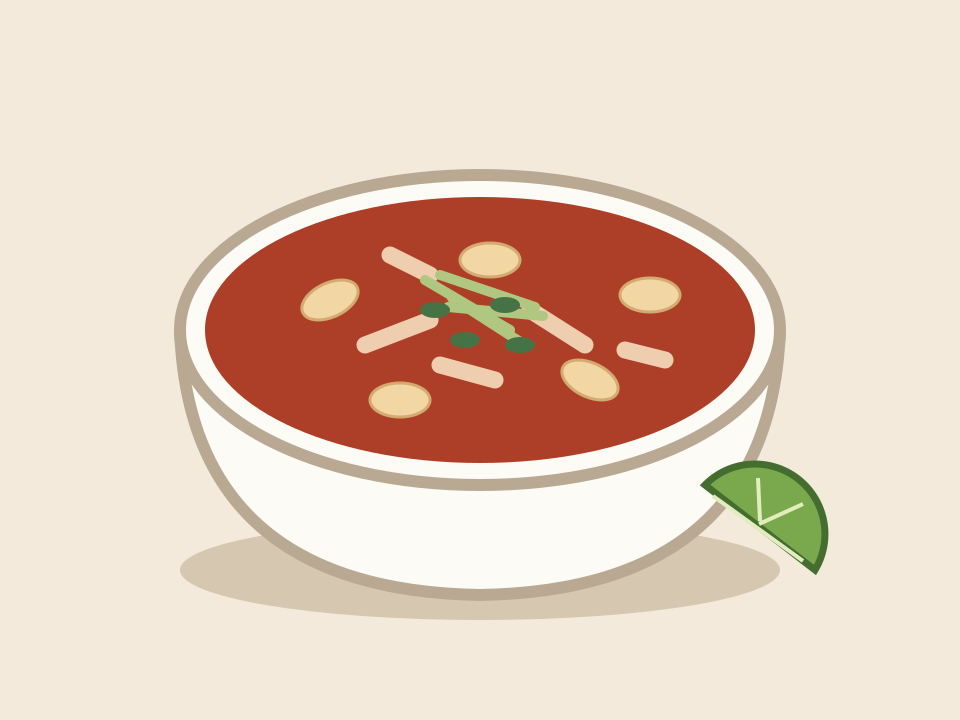
Chicken and white beans in red enchilada broth, finished with lime, cabbage and cilantro.
Stir during sautéing and simmering; check cooked chicken reaches 165°F before serving.
The listed pan and basket capacity, cook times, and thermometer endpoint are for four servings.
Ingredients are scaled; keep food thickness, spacing, settings and safe endpoints fixed. Timings assume the four-serving batch and specified shortcuts. More food can require additional batches.
These newly designed recipes have not been cooked, tasted or stopwatch-tested. Nutrition is an ingredient estimate, not laboratory analysis. Sources support safety, labels or comparable methods; they do not validate this exact recipe.
Read left to right. Each merged cell acts on the ingredient rows feeding into it. Parallel branches stay separate until plating.
| Use fully cooked chicken and canned beans. Prepare washed cabbage and cilantro; keep them for serving. Use a 4-quart or larger pot, or a larger pot/batches above four servings. | ||||
| Heat oil over medium heat; sauté onion and pepper about 5 min until soft, then add garlic for 30 sec. | Add broth, sauce, canned beans with liquid, salt and cayenne. Boil, then simmer 10 min, stirring occasionally. | Add cooked chicken; simmer until chicken reaches 165°F in several places. | Turn off heat, stir in lime; serve with cabbage and cilantro. | |
Prepare cold sides first. Keep raw-poultry tools separate; use clean serving utensils. Probe more than one thick piece. A timer is not a doneness test.
Use fully cooked shredded chicken and canned, fully cooked beans. Wash and prepare the vegetables and garnishes. Set a 4-quart or larger saucepan on the stovetop; use a larger pot or batches for six or eight servings.
Heat the oil over medium heat. Cook onion and bell pepper for about 5 minutes, stirring, until softened. Add garlic and cook for 30 seconds.
Add broth, enchilada sauce, canned beans with their liquid, salt and cayenne. Bring to a boil, then reduce heat and simmer gently for about 10 minutes, stirring occasionally. Add the cooked chicken and return to a simmer. Heat until chicken reaches 165°F in several places, about 5 minutes or longer as needed. Do not use raw chicken with this method.
Turn off the heat and stir in lime juice. Divide among four bowls and top with cabbage and cilantro. Taste before adding more salt or cayenne.
Chop vegetables; soften onion and pepper, then briefly cook garlic.
Bring broth, sauce and beans to a boil; simmer 10 min, stirring occasionally.
Add fully cooked chicken, check temperature, then add lime and garnishes.
Stages can overlap. Do not add every row as separate elapsed time. Safe endpoints and actual appliance behavior override the estimate.
Red enchilada sauce gives the broth chile flavor; lime and fresh cabbage balance it.
376 kcal · 43 g protein · 33 g total carbohydrate · 7 g fiber · 26 g net carbohydrate
Listed allergens: None in the specified ingredients. Check purchased labels and cross-contact.
Refrigerate in shallow containers within two hours, or one hour above 90°F. Use within 3–4 days or freeze; reheat to 165°F. Keep cold greens and yogurt separate.
Sources support safety, labels or comparable methods. They do not validate this exact newly designed recipe.